
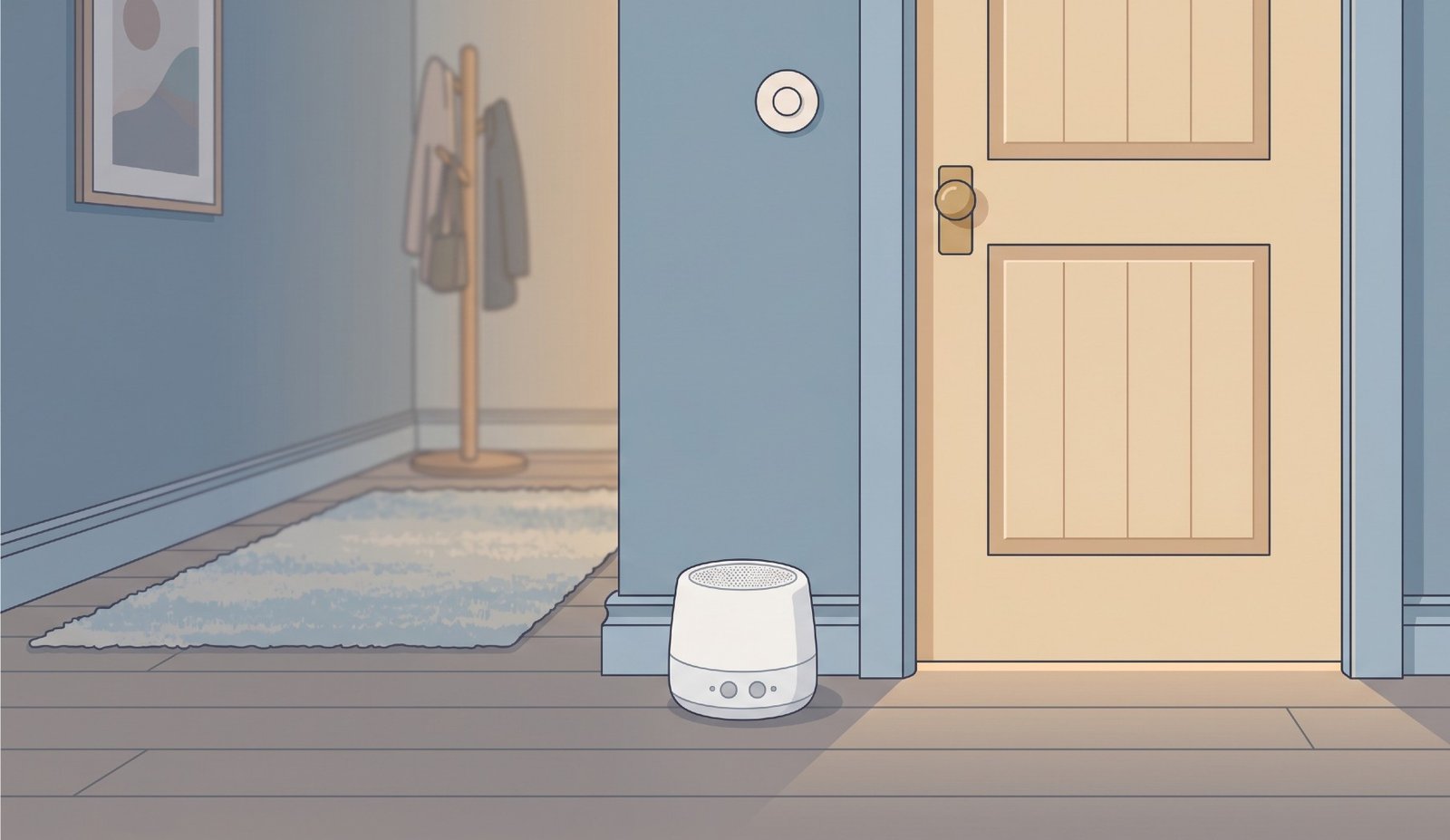
My son just turned two. For the last however-many months, there has been a squat little white disc sitting on the floor outside his bedroom door, humming away every single night like a tiny mechanical monk.
That’s our Dohm Classic. It doesn’t go in his room. It goes in the hallway.
Because I did what dads do — I researched it — and I found enough articles about sound machines exceeding safe decibel levels for infants that I made a judgment call. Keep the white noise. Move it back. Problem solved, probably.
So when you ask me “do you need a baby sound machine” my honest answer is: no. You don’t need one. Plenty of kids sleep fine without them. But also — and I say this as someone who was skeptical — we are absolutely not getting rid of ours. Not until he asks us to.
Here’s the deal on sound machines, what the actual concerns are, and what to look for if you decide (like most of us eventually do) that 3am is not the time to be principled about it.
The Case Against a Baby Sound Machine
Here’s the thing nobody wants to lead with on a sound machine post: there are real reasons to think twice.
The big one is volume. Sound machines can get loud — louder than people realize, and louder than is great for a small set of ears six inches away from the speaker. There’s enough out there about pediatric hearing concerns to take it seriously. Not panic about it. Take it seriously. Most articles I read came down to roughly the same advice: keep the volume reasonable, and don’t park the thing on the crib rail like it’s a bedside lamp.
The second concern is the dependency thing. The argument goes: if you train a baby to sleep with white noise, you’ve now got a kid who can’t sleep without it. Suddenly you’re packing a sound machine for every sleepover, every grandparent visit, every hotel stay until college.
I’ll be honest — I think this one’s a little overstated. My kid also can’t sleep without his blanket, his stuffed elephant, and a very specific bedtime routine that involves three books and exactly two songs. The sound machine is one variable in a system that has many variables. If we needed to travel without it, we’d figure it out. Kids are more adaptable than the internet gives them credit for.
The third concern is the simplest: maybe you just don’t need one. Plenty of babies sleep great in a normal-quiet house with normal house noises. If yours is one of them — congratulations, you’ve won the lottery, please stop reading and go enjoy your life.
For the rest of us, there’s a case to be made on the other side.
The Case For a Baby Sound Machine
Okay. So why is there still a Dohm humming in my hallway every night?
Because real life is loud. And inconsistent. And mostly happening on the other side of a thin door from where a small person is trying to sleep.
I work from home. That means meetings, keyboards, the occasional involuntary swear when something crashes mid-deploy. My wife and I cook dinner, watch shows, and have actual conversations after the kid goes down. We have a dog who has opinions about the mail carrier, the UPS guy, the Amazon guy, and any leaf that moves wrong. None of this stops because the baby is sleeping.
A sound machine doesn’t make a house quiet. It makes the changes in sound less obvious. That’s the whole game. It’s not about creating silence — it’s about flattening the spikes so a slammed cabinet door three rooms away doesn’t read as DEFCON 1 to a sleeping toddler.
The other thing nobody mentions: it’s not just for the baby. It’s for you. Knowing there’s a layer of consistent sound between your kid’s room and the rest of the house means you stop tiptoeing. You stop whisper-fighting about whose turn it is to take the dog out. You can run the dishwasher at 8pm without negotiating it like a hostage situation. The sound machine buys back your evenings.
And then there’s 3am. The hour when a creaky floorboard, a passing truck, or a neighbor’s car door slamming can undo two hours of bedtime work in three seconds. White noise doesn’t prevent every wake-up. But it absorbs enough of the small stuff that you’re not getting up for things that didn’t need to wake anyone.
So no — you don’t need one. But if you work from home, have other kids, have a dog, live near a road, share walls with neighbors, or just enjoy the radical concept of watching TV at a normal volume after bedtime — you’ll probably want one.
The Middle-Ground Move: Put It Outside the Door
This is the one piece of advice I’d actually argue for, and I almost never see it written down anywhere.
If you’re worried about volume but you also need the white noise to do its job, put the sound machine in the hallway, just outside the bedroom door. Not on the dresser. Not on the changing table. Not strapped to the crib. In the hallway. On the floor. Pointed at the door.
This does two things. First, it puts physical distance between the speaker and the kid’s ears, which is the single biggest variable in how loud the sound is at the source that matters — their head. Second, it lets you run the machine at a higher volume without that volume reaching the crib at the same level. You get the masking effect on the noisy side of the door (the rest of the house) without blasting the quiet side (the bedroom).
That’s exactly how ours has been set up for months. Dohm Classic, hallway floor, a few feet from the closed door. He sleeps. We don’t have to whisper. The dog can lose his mind at a delivery truck and the kid doesn’t flinch. Everyone wins. Bonus: nothing in the crib but the kid, which is exactly what the AAP’s safe sleep guidance asks for — and I’m not about to argue with pediatricians at 3 AM.
Two practical notes if you want to copy this setup. One, mechanical sound machines (the kind with an actual fan inside, like the Dohm) work better outside the door than digital ones, because the sound is broader and more diffuse — it carries through the door more naturally than a tinny speaker loop. Two, you’ll want a model with a real on/off switch and no glowing lights, because hallway lights at 2am when you’re stumbling to the bathroom are their own problem.
What to Look For (and Three Picks Worth Considering)
I’m not going to do a full breakdown here — I’ve already written a longer buying guide that walks through the categories in detail, and I’d rather send you there than half-do it twice. But here’s the short version of what actually matters and three machines worth a look.
The features that matter, in order: a real on/off switch (not a touch panel that glows), a continuous sound that doesn’t loop audibly, no WiFi or app required, and a volume range that goes loud enough to be useful without maxing out at concert levels. Anything else is a bonus.
Yogasleep (formerly Marpac) Dohm Classic — Dad’s Top Pick
This is the one humming in my hallway. It’s a mechanical fan inside a plastic case — that’s it. No app, no Bluetooth, no light show. You twist the top to adjust the tone, you turn it on, and it runs. It’s the kind of product that doesn’t try to do anything else, which is why it works. It’s not the cheapest option, but it’s the one I’d buy again without thinking about it.
Hatch Baby (Successor to the Hatch Rest+ 2nd Gen)
The opposite philosophy from the Dohm. Heads up: Hatch no longer sells the Rest+ 2nd Gen — its replacement is the Hatch Baby, at about $80. It’s digital, app-controlled, doubles as a night light, and has programmable Time-to-Rise and Time-for-Bed cues. Unlike the Rest+, it has no battery backup, so it has to stay plugged in. Some people love this. I’m a little wary of WiFi-connected anything in a kid’s room (and my wife is more wary than I am), but if you want one device that handles sound, light, and a toddler-friendly time-to-rise cue as your kid gets older, the Hatch is the obvious pick. Just be deliberate about volume settings. Can’t pick between the hallway hummer and the glowing gadget? I put them head to head in Hatch vs Dohm.
LectroFan Classic
A solid middle-ground option. Digital, no app, no WiFi, no lights — just a small box with buttons that produces twenty different fan and white noise sounds. About the same price as the Dohm (around $50), more versatile in terms of sound options, and travel-friendly. If you want something simple but not strictly mechanical, this is the one.
For the full breakdown — including what to avoid, the WiFi question, and which one suits which kind of sleeper — read the full buying guide on the best baby sound machines. I go deeper there on the comparisons. (And if you’re in the market for a baby monitor too, the non-WiFi baby monitor article is the companion piece — same logic, same WiFi-skeptical angle.)
So — Do You Need a Baby Sound Machine? (Actually?)
No. You don’t need one. You don’t need a stroller fan, either, or a wipes warmer, or any of the other ninety things the baby industrial complex has convinced new parents are required infrastructure.
But the little white disc in my hallway has been running for over a year now. My kid sleeps through the dog losing his mind at squirrels. My wife and I have actual conversations after 8pm. Nobody is whispering through dinner. The cost of the machine has been paid back in saved sanity roughly a thousand times over.
You don’t need one. We’re keeping ours.
Until he asks us to get rid of it. Which, knowing toddlers, will be the same week he discovers he has opinions about dinner.
Prices as of October 2026 and may have changed since.